

Quick answer
Network evaluation is critical for self-funded health plans because carrier negotiated rates vary widely—and are rising at most major hospitals. Handl Health's analysis of 62 major providers (Oct 2025–Mar 2026) shows median rate increases from 0.8% (UnitedHealthcare) to 7.4% (Aetna), with individual hospital spikes as high as 79%. Without systematic network evaluation, employers cannot identify where to contain costs.
Key takeaways
- Carrier median rate increases (Oct 2025–Mar 2026): Aetna +7.4%, BCBS +2.9%, UnitedHealthcare +0.8%
- Aetna raised rates at 50 of 62 major providers surveyed; its single largest increase was +79% at Cedars-Sinai Marina Spine Center
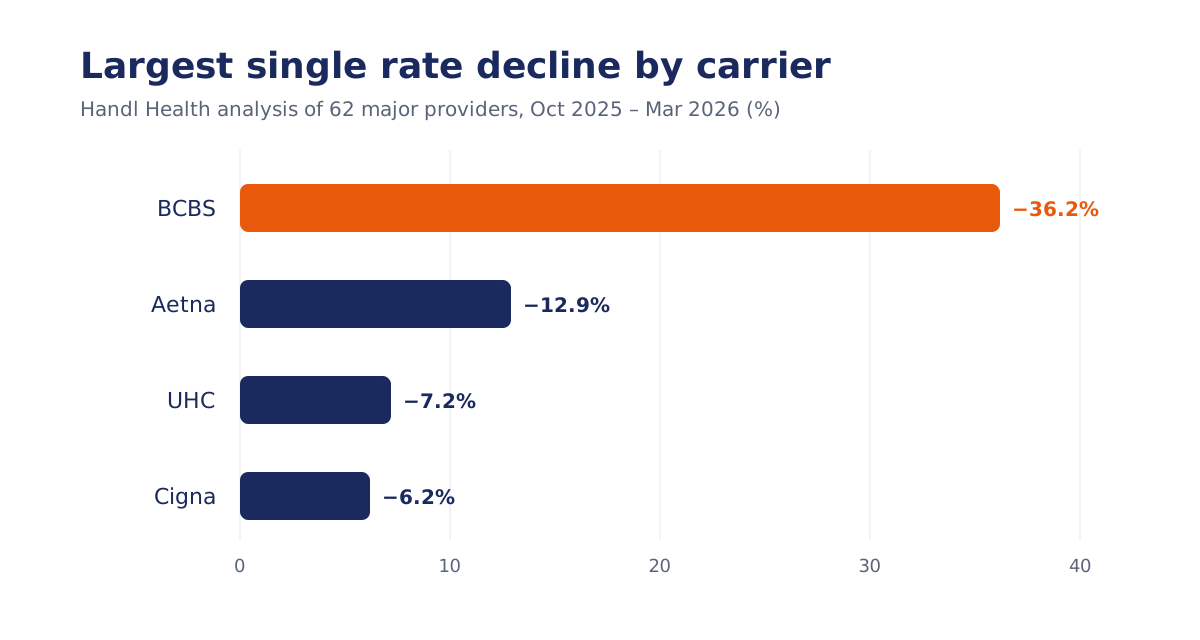
- BCBS dropped rates at 13 hospitals; the largest single decrease was −36.2% at Memorial Hospital For Cancer And Allied Diseases (New York)
- UnitedHealthcare dropped rates at 18 hospitals, with the biggest single decline at −7.2%
- A Total Knee Arthroplasty ranges from $12,667 to $23,000 across major NJ/NY facilities — a $10,000+ spread for the same procedure
- Employers lose more than $2,000 per employee annually on poor network design and opaque pricing
Why do carrier negotiated rates matter for self-funded employers?
Carrier negotiated rates are increasing across the board and have been for a while; that's no secret.
But at a handful of major hospitals around the country, average carrier rates are actually falling. Understanding both trends — where rates rise and where they fall — is how self-funded employers and their broker partners find real savings opportunities.
Which carriers are raising rates the most?
| Carrier | Median Rate Increase | Avg Rate Increase | Largest Single Increase |
|---|---|---|---|
| Aetna | +7.4% | — | +79% (Cedars-Sinai Marina Spine Center) |
| BCBS | — | +2.9% | −36.2% (Memorial Hospital For Cancer, NY) |
| UnitedHealthcare | +0.8% | +1.8% | −7.2% (18 hospitals) |
| Cigna | — | — | >+20% (3 hospitals) |
Even with some hospital-level rate decreases, overall rates continue to balloon. Aetna, Blue Cross Blue Shield, Cigna and UnitedHealthcare all returned increases at the vast majority of the 62 hospitals surveyed.
Where are carrier rates actually falling?
Specialized treatment centers are seeing the biggest rate decreases. At the Memorial Hospital For Cancer And Allied Diseases in New York, Blue Cross Blue Shield rates dropped by 36.2% in the six months between October 2025 and March 2026.
The Adventhealth Lab system in Florida and the City of Hope Cancer Center in Atlanta returned BCBS decreases of 24.2% and 17.3%, respectively.
BCBS rates fell at 13 of the 62 major providers surveyed. UnitedHealthcare rates dropped at 18 hospitals — the biggest change was −7.2% over the 6-month period. Aetna's largest single decrease came in at 12.9%; Cigna's biggest decrease was 6.2%.
How much does the same procedure cost at different hospitals?
Procedure cost variation is one of the most powerful levers in plan design. For a Total Knee Arthroplasty across five major NJ/NY facilities — Hackensack University Medical Center, Hospital for Special Surgery, Morristown Medical Center, Overlook Medical Center and Penn Medicine Princeton Medical Center — the average negotiated cost ranges from $12,667 to nearly $23,000.
That's a spread of more than $10,000 for the same procedure at facilities within the same region.
Why isn't data transparency enough on its own?
Appropriately weighing data regarding negotiated health insurance rates empowers brokers to make optimal insurance pricing decisions for their employer clients. But mere data transparency isn't enough; you need an expert guide to help you through the information, separating the data that truly makes an impact from all the white noise.
Site-of-care differentials are frequently discussed as a driver of healthcare spend, but the data show that it's not as cut and dried as weighing the cost of an ambulatory care setting versus a hospital. Brokers need help to dig deeper than surface-level data to truly create an actionable plan design.
Handl Health helps brokers create healthcare plans that promote lower fees for the same level of care, empowering them to become advocates for a more sustainable healthcare future.
Frequently asked questions
What is network evaluation for self-funded health plans?
Network evaluation is the process of analyzing carrier negotiated rates across your member population's most-used hospitals and providers. It identifies which carriers offer the most competitive pricing for your specific employee demographics and geography — enabling smarter renewal negotiations and plan design decisions.
How often do carrier negotiated rates change?
Carrier negotiated rates are updated regularly, often on a six-month or annual cycle. Handl Health's analysis of major carriers between October 2025 and March 2026 found significant shifts — with individual hospital rate changes ranging from a 79% increase to a 36.2% decrease over just six months.
Which major carriers are increasing rates the most?
Based on Handl Health's analysis of 62 major providers (Oct 2025–Mar 2026), Aetna had the highest median rate increase at 7.4%, followed by BCBS with an average increase of 2.9% and UnitedHealthcare with a median of 0.8%.
Are any carrier rates actually decreasing?
Yes. BCBS dropped rates at 13 of 62 major providers surveyed, with the largest single decrease of 36.2% at Memorial Hospital For Cancer And Allied Diseases in New York. UnitedHealthcare dropped rates at 18 hospitals. Specialized treatment centers tend to see the most significant decreases.
How much can the same procedure cost at different hospitals?
Costs can vary dramatically. For a Total Knee Arthroplasty at major NJ/NY facilities, the average negotiated cost ranges from $12,667 to nearly $23,000 — a spread of more than $10,000 for the same procedure within the same region.
What is a self-funded health plan?
A self-funded (or self-insured) health plan is one where the employer directly pays employee health claims rather than paying a fixed premium to an insurer. The employer bears the financial risk and has greater control over plan design. Self-funded plans cover approximately 75% of U.S. employer-sponsored health insurance.
How can a self-funded employer reduce costs through network design?
Employers can reduce costs by tiering their provider network based on cost and quality data, steering members toward high-value facilities, and negotiating better terms using MRF-based actuarial analysis. Handl Health provides the data and analytics infrastructure to implement and continuously monitor these strategies.
What are machine-readable files (MRFs) and why do they matter?
Machine-readable files are federally mandated data files that carriers and hospitals must publish, disclosing their negotiated rates for every covered service. They are the foundational data source for network evaluation and plan benchmarking — enabling plan sponsors to compare costs across carriers and facilities at scale.