Quick answer
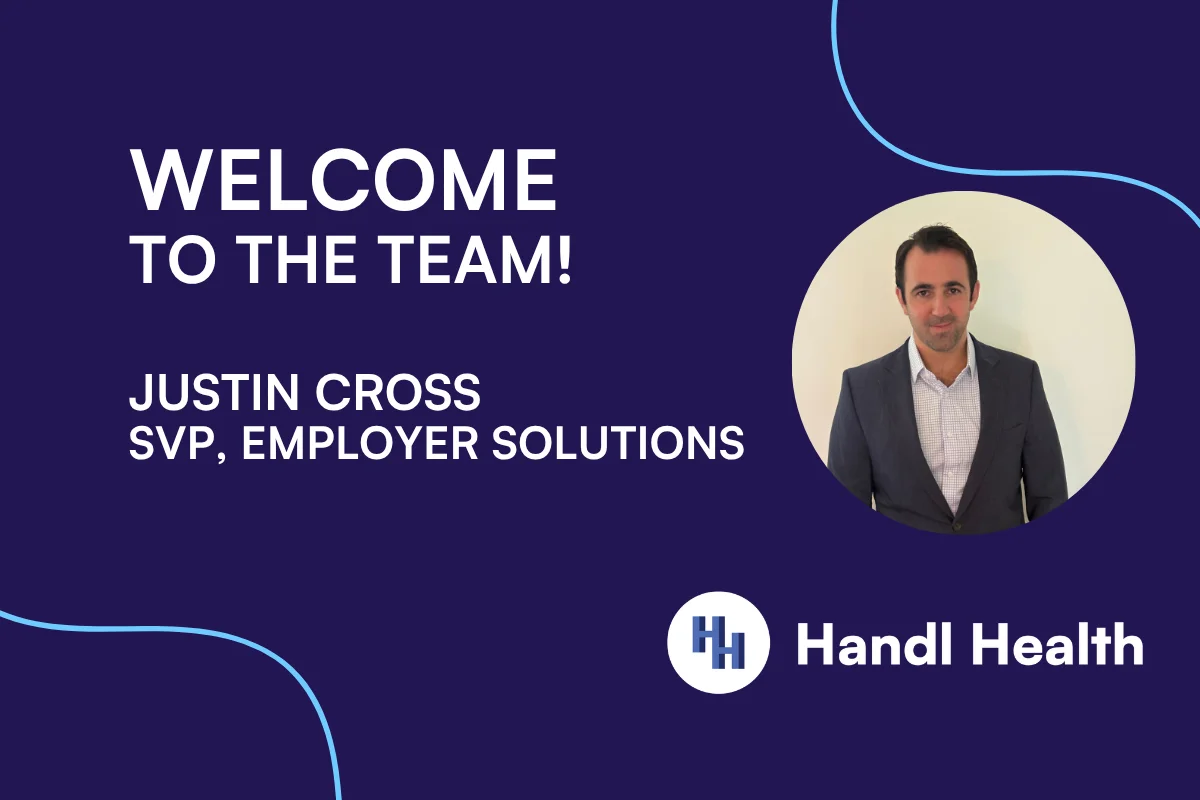
Handl Health appointed Justin Cross as Senior Vice President of Employer Solutions in August 2026. Cross brings nearly 20 years of benefits industry experience and will lead independent, actuarial-grade analysis to help employers and their broker partners negotiate smarter plan renewals, optimize healthcare benefit design, and document fiduciary due diligence using carrier price transparency data.
Key takeaways
- Justin Cross brings nearly 20 years of benefits consulting, account management, underwriting and analytics experience across mid-market and large employers
- Employers lose more than $2,000 per employee annually to poor network design, outdated plan structures and opaque pricing
- Handl's platform is built on carrier machine-readable files (MRFs), delivering actuarial-grade network diagnostics
- Cross's role focuses on fiduciary due diligence documentation — a growing compliance priority for plan sponsors
- Nearly 75% of U.S. employers are self-funded, yet most lack the technology to evaluate plan performance
Why is Handl adding an employer solutions leader now?
LOS ANGELES, August 11, 2026 — CFOs and HR leaders face double-digit healthcare price increases, and self-funded employers increasingly need independent, data-driven guidance to optimize their benefits programs. Handl Health created the SVP of Employer Solutions role to deliver that guidance directly to employers and their broker partners.
Who is Justin Cross?
Cross has nearly 20 years of benefits industry experience, building and leading consulting, account management, underwriting and analytics teams serving mid-market and large employers.
"We have more access to healthcare pricing data than I've ever seen during my entire career. If interpreted correctly, this information demystifies the true cost of healthcare. I believe this data is the foundation for the next generation of employee benefits and will lead to better cost-effective plans for employers and more predictable pricing for employees." — Justin Cross
How does Handl Health help employers reduce healthcare costs?
Built on the foundation of price transparency machine-readable files, Handl's AI-enabled parallel intelligence platform ingests, normalizes and extracts critical healthcare intelligence. This enables employers to identify in-network cost savings, tier providers based on cost, steer patients toward high-value care options, and continually monitor plan performance — meeting fiduciary obligations along the way.
With Handl, employers and their broker partners gain access to:
- Renewal negotiation support: Actuarial-grade network diagnostics using current data
- Plan design actuarial support: Identification of waste in existing plan design
- Quarterly plan analytics: Continuous claims monitoring and plan review
"We're seeing a once-in-a-lifetime shift in how employers purchase healthcare. That's why we're helping employers take control of their healthcare spend by connecting data insight to action in partnership with their broker. I'm pleased to welcome Justin to lead this effort." — Ahmed Marmoush, Handl Health co-founder and CEO
Frequently asked questions
What does a Senior Vice President of Employer Solutions do at Handl Health?
The SVP of Employer Solutions leads independent, third-party analysis to help employers and benefits consultants negotiate smarter renewals, optimize plan design, and document fiduciary due diligence using healthcare pricing transparency data.
Why are employers looking for new healthcare cost solutions now?
Employers face double-digit healthcare price increases. Most self-funded plans lose more than $2,000 per employee annually to poor network design, outdated plan structures and opaque pricing — and most lack the technology to identify where the waste is happening.
How does Handl Health use machine-readable files (MRFs)?
Handl's platform ingests, normalizes and extracts intelligence from carrier machine-readable files, enabling employers to identify in-network cost savings, tier providers by cost, and steer members toward high-value care options.
What is fiduciary due diligence in healthcare benefits?
Fiduciary due diligence means employers document that they have acted prudently in selecting and monitoring their health plan — reviewing costs, quality, and network performance with data-backed analysis to meet their fiduciary obligations.
Does Handl Health work directly with employers or through brokers?
Handl works in partnership with benefits consultants and brokers. The platform sits behind the broker's brand and relationship, providing the intelligence brokers need to advise employers with conviction and create measurable plan improvements.
What types of employers benefit most from Handl's platform?
Self-funded and level-funded employers — typically 100 to 5,000 employees — benefit most. These employers bear actual healthcare risk and have real dollars to optimize through smarter network evaluation and plan design decisions.
What is the difference between self-funded and fully insured health plans?
In a self-funded plan, the employer directly pays employee health claims and bears the financial risk, rather than paying a fixed premium to an insurer. Self-funded plans offer more control over plan design and cost management, which is why network evaluation and Handl's analytics platform are particularly valuable for them.